MHX • MY HUMAN XPERIENCE

Spinal Flow
Recovery Program

A gentle movement routine for flexibility, posture, core stability, and relaxation. Explore ten illustrated exercises at your own pace.

Before you begin: Move gently and stay within a comfortable range. These exercises are general educational guidance, not a substitute for individualized medical advice. Consult a qualified healthcare professional before beginning if you have an injury, health condition, or questions about which movements are appropriate for you. Stop if you experience pain, dizziness, or unusual symptoms. Supported Sphinx and Mini Bridge may not be suitable for everyone.
0 / 10 complete

Follow the sequence below at your own comfortable pace. Your checkmarks are saved on this device for the current date.

01
RELAXATION

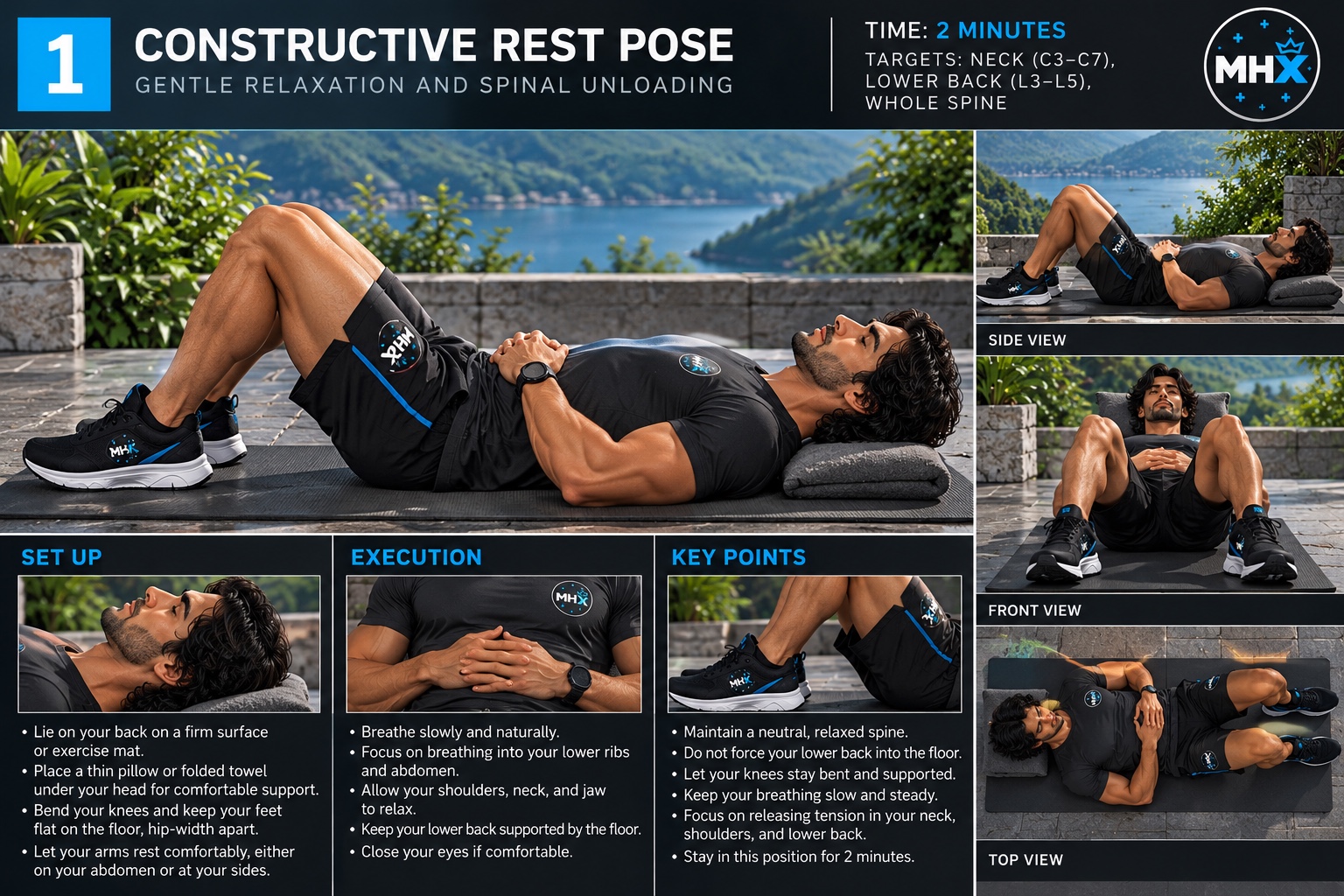
Constructive Rest Pose

2 minutes
MHX illustrated guide for Constructive Rest Pose

How to do it

Lie on your back on a firm but comfortable surface. Bend your knees and place your feet flat, about hip-width apart. Place a thin pillow or folded towel under your head if needed. Rest your hands on your abdomen or at your sides. Breathe gently into your lower ribs and belly while allowing your jaw, shoulders and back to soften.

Breathing

No strengthening effort is required.

Safety & modifications

Keep your neck neutral. Do not deliberately flatten or arch your lower back. Change positions slowly and use support as needed.
02
GENTLE MOBILITY

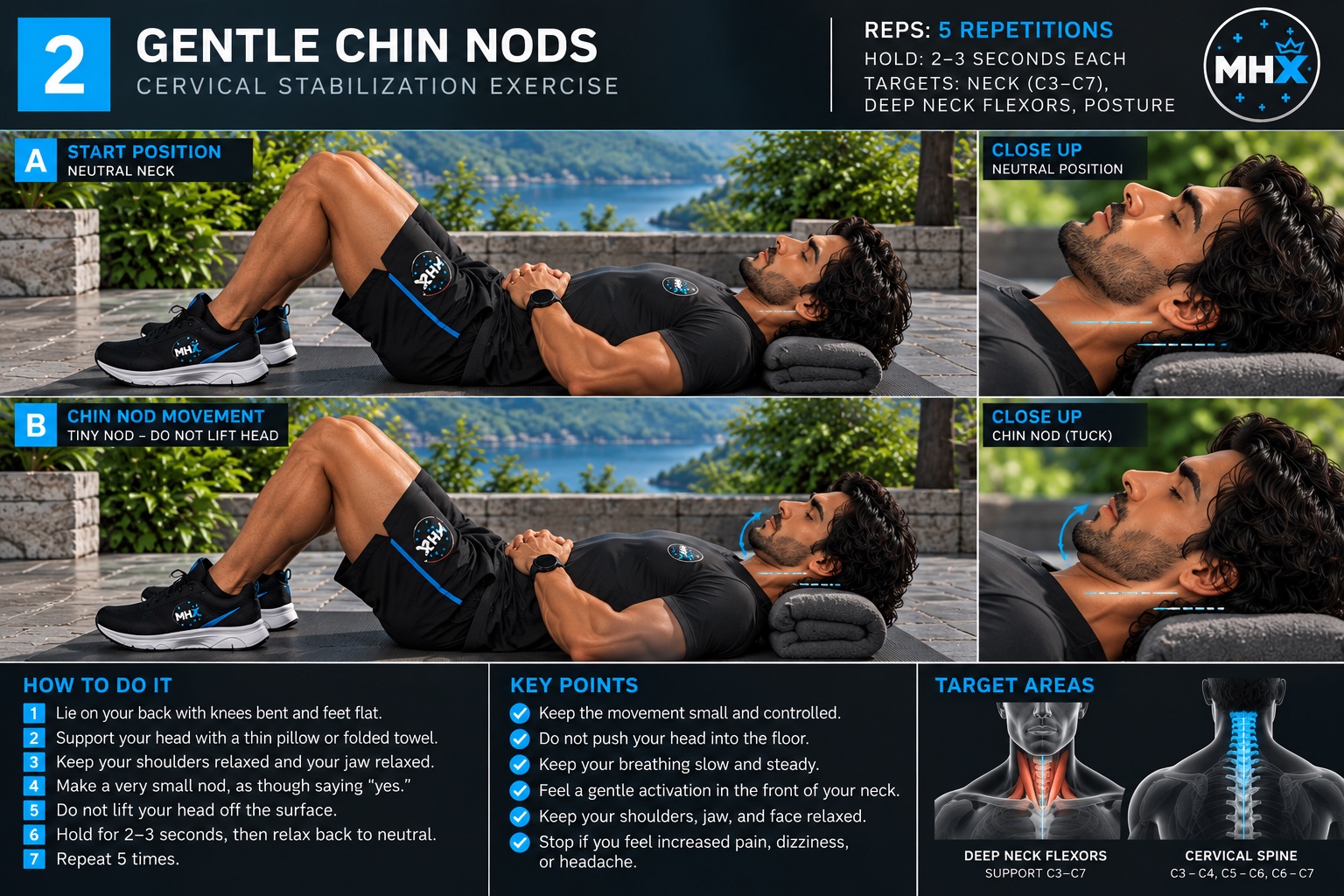
Gentle Chin Nods

5 repetitions · hold 2–3 seconds

MHX illustrated guide for Gentle Chin Nods

How to do it

Lie on your back with knees bent and head supported comfortably. Keep your eyes toward the ceiling and your jaw relaxed. Make a tiny nod as if saying yes, drawing your chin very slightly toward your throat. Keep the back of your head supported; do not lift it. Hold briefly, then return to neutral.

Breathing

Exhale softly during the nod; inhale as you release.

Safety & modifications

Avoid forceful chin tucks or pressing the head into the floor. Stop for headache, dizziness, radiating symptoms or increasing neck pain. Ask a qualified instructor or healthcare professional if you are unsure about technique.

03
GENTLE MOBILITY

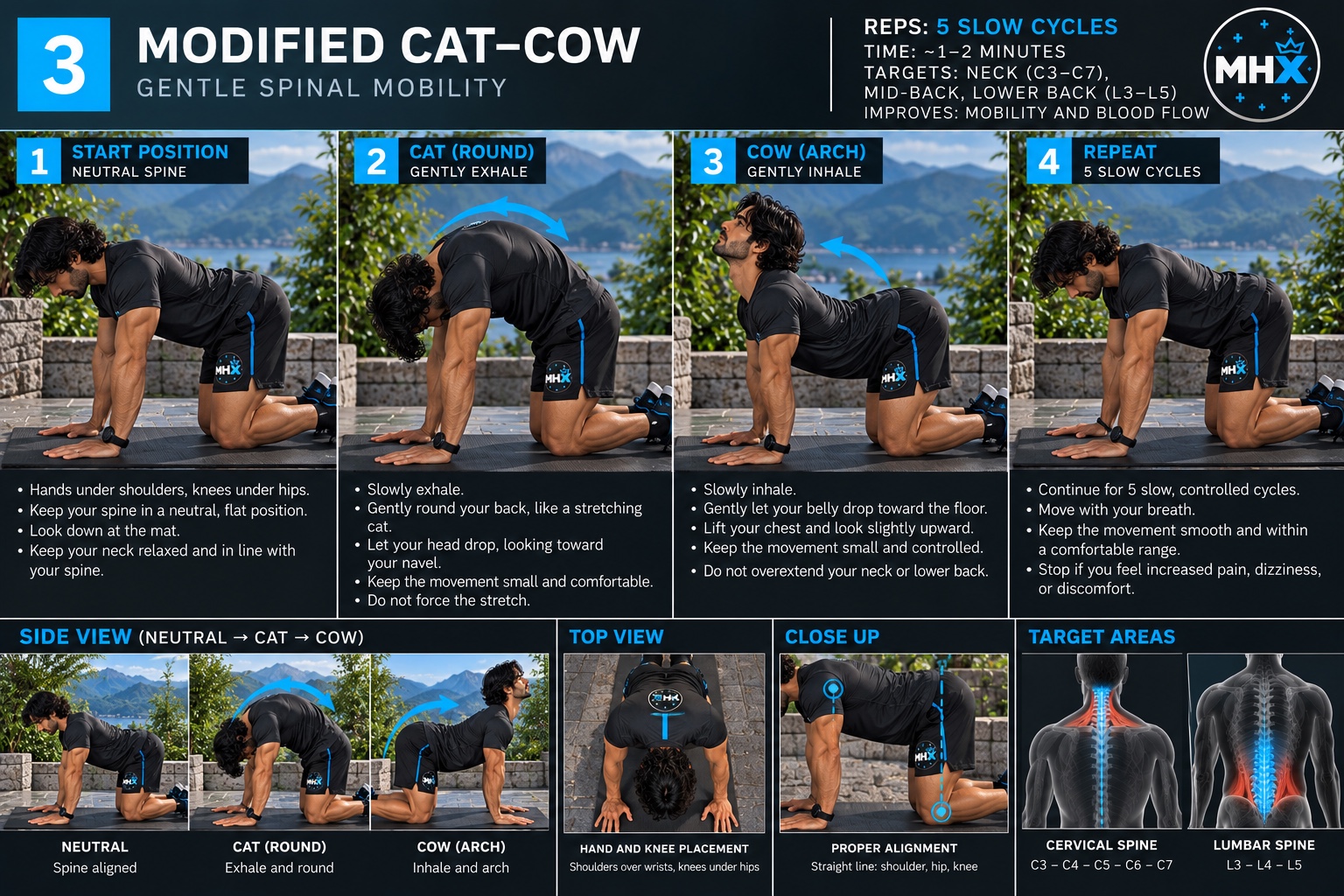
Modified Cat–Cow

5 slow cycles

MHX illustrated guide for Modified Cat–Cow

How to do it

Begin on hands and knees, hands under shoulders and knees under hips. Start with a comfortable neutral spine and eyes toward the floor. As you exhale, gently round your middle and lower back a small amount. As you inhale, return toward neutral and make only a small comfortable arch if tolerated. Keep your head roughly in line with your spine.

Breathing

Move with slow, easy breathing.

Safety & modifications

Do not throw your head back, drop it sharply, or push into end-range spinal flexion or extension. Use a chair or countertop-supported version if kneeling is uncomfortable.

04
GENTLE MOBILITY

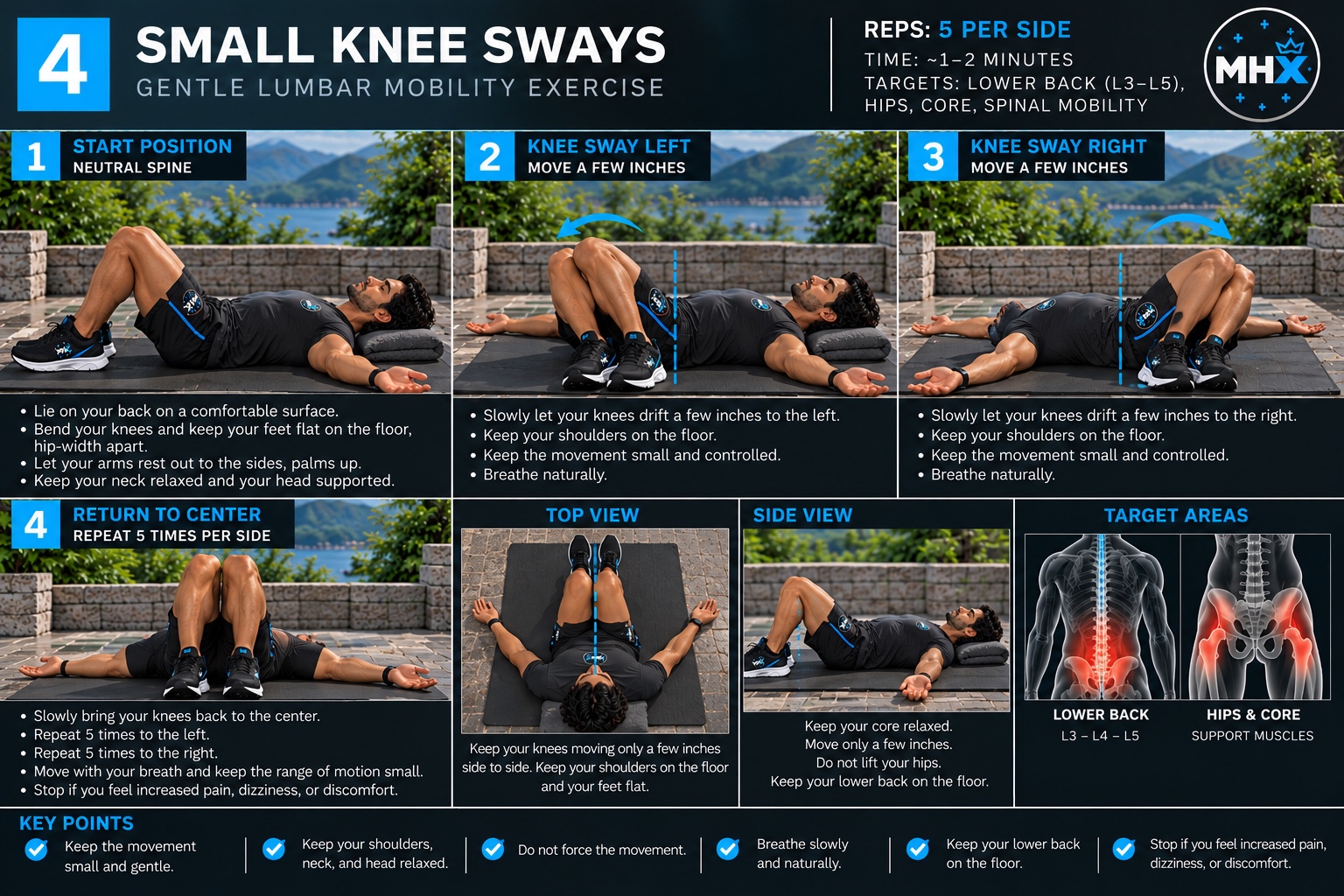
Small Knee Sways

5 per side

MHX illustrated guide for Small Knee Sways

How to do it

Lie on your back with knees bent and feet flat. Support your head and open your arms comfortably. Keep both shoulders relaxed. Let both knees drift just a few inches to one side without forcing a twist; return to center, then move to the other side.

Breathing

Exhale as the knees move; inhale returning to center.

Safety & modifications

Keep the range very small and comfortable. Do not push through back pain or leg symptoms. If symptoms worsen, omit the movement.

05
GENTLE MOBILITY

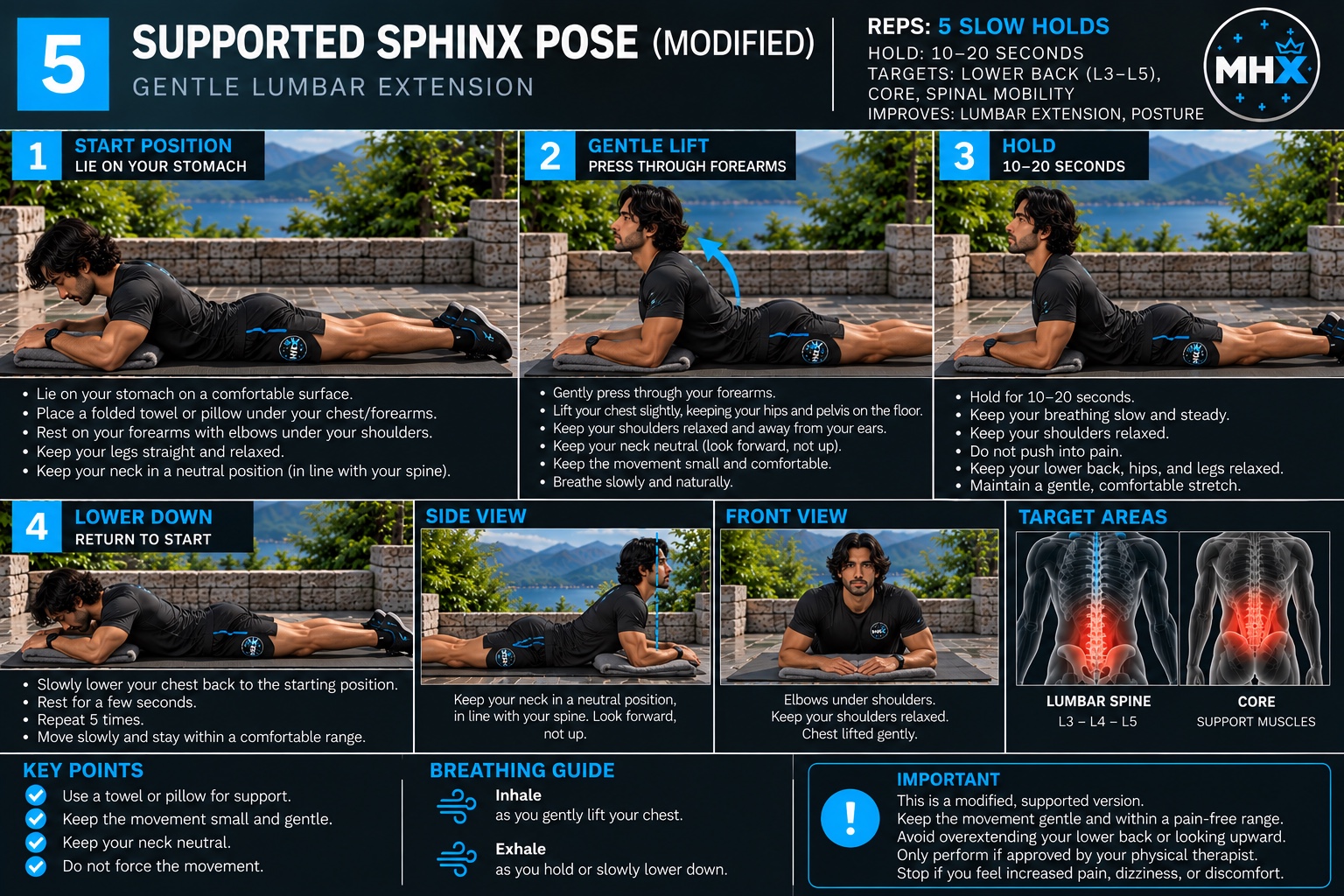
Supported Sphinx Pose (Modified)

Optional · up to 5 holds of 10–20 seconds

MHX illustrated guide for Supported Sphinx Pose (Modified)

How to do it

Lie on your stomach with a folded towel under the chest or forearms if useful. Place elbows near shoulders and gently raise your upper chest onto forearms while keeping the pelvis supported. Keep your gaze forward/down and neck neutral. Hold only in a comfortable range, then slowly lower.

Breathing

Breathe steadily throughout each hold.

Safety & modifications

Optional; consult a qualified professional if unsure whether this movement is suitable for you. Avoid painful lumbar extension, neck arching, leg pain, numbness or dizziness. Skip this movement if it is uncomfortable or not suitable for you.

06
STABILIZATION

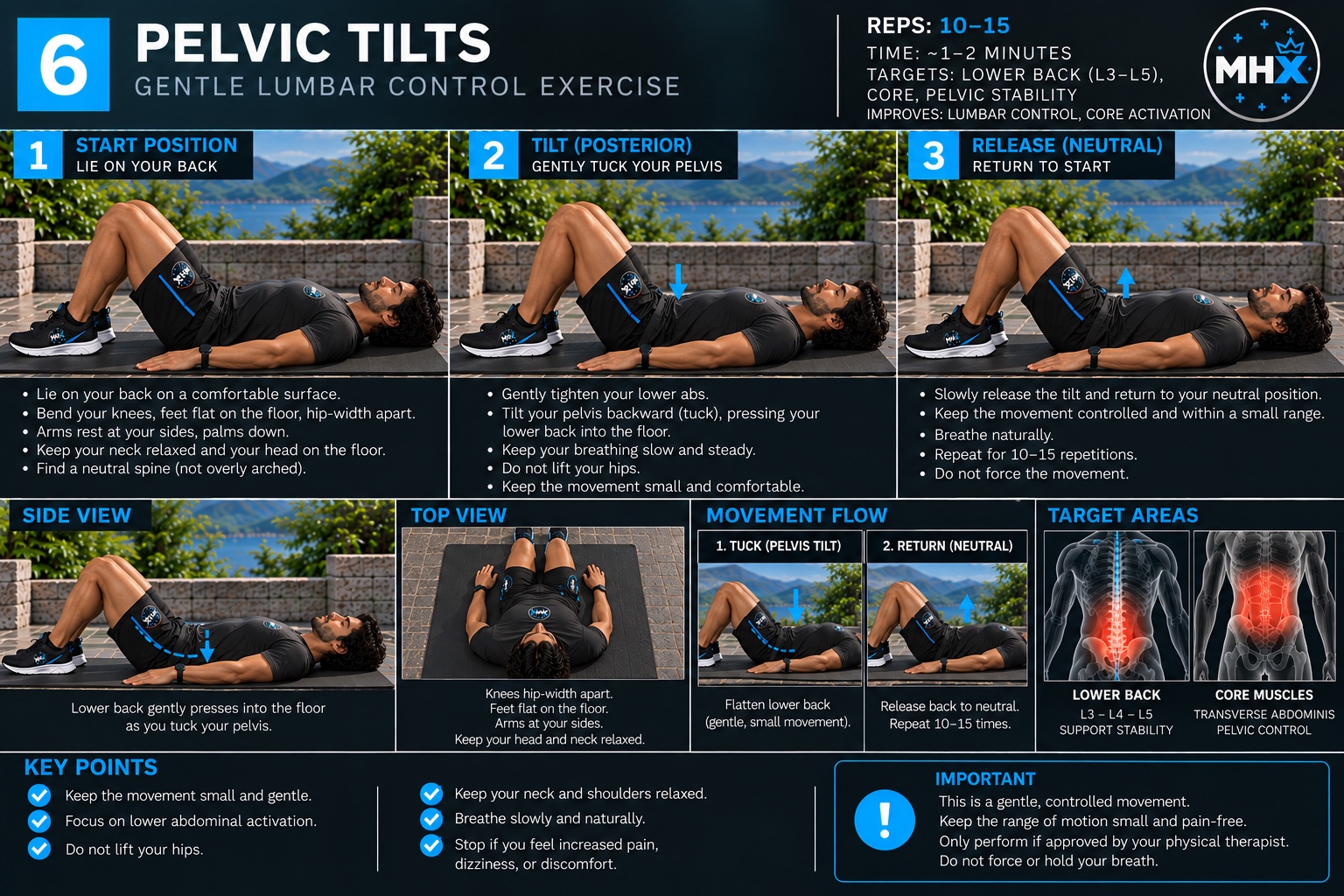
Pelvic Tilts

10–15 repetitions

MHX illustrated guide for Pelvic Tilts

How to do it

Lie on your back with knees bent and feet flat. Rest arms by your sides and keep your neck supported. Gently tighten your lower abdomen and roll your pelvis backward just enough to slightly reduce the gap beneath your lower back. Then release to a comfortable neutral position.

Breathing

Exhale during the gentle tilt; inhale as you release.

Safety & modifications

Make this a small pelvic movement, not a forceful flattening of the back. Do not lift your hips. Reduce repetitions if sore.

07
STABILIZATION

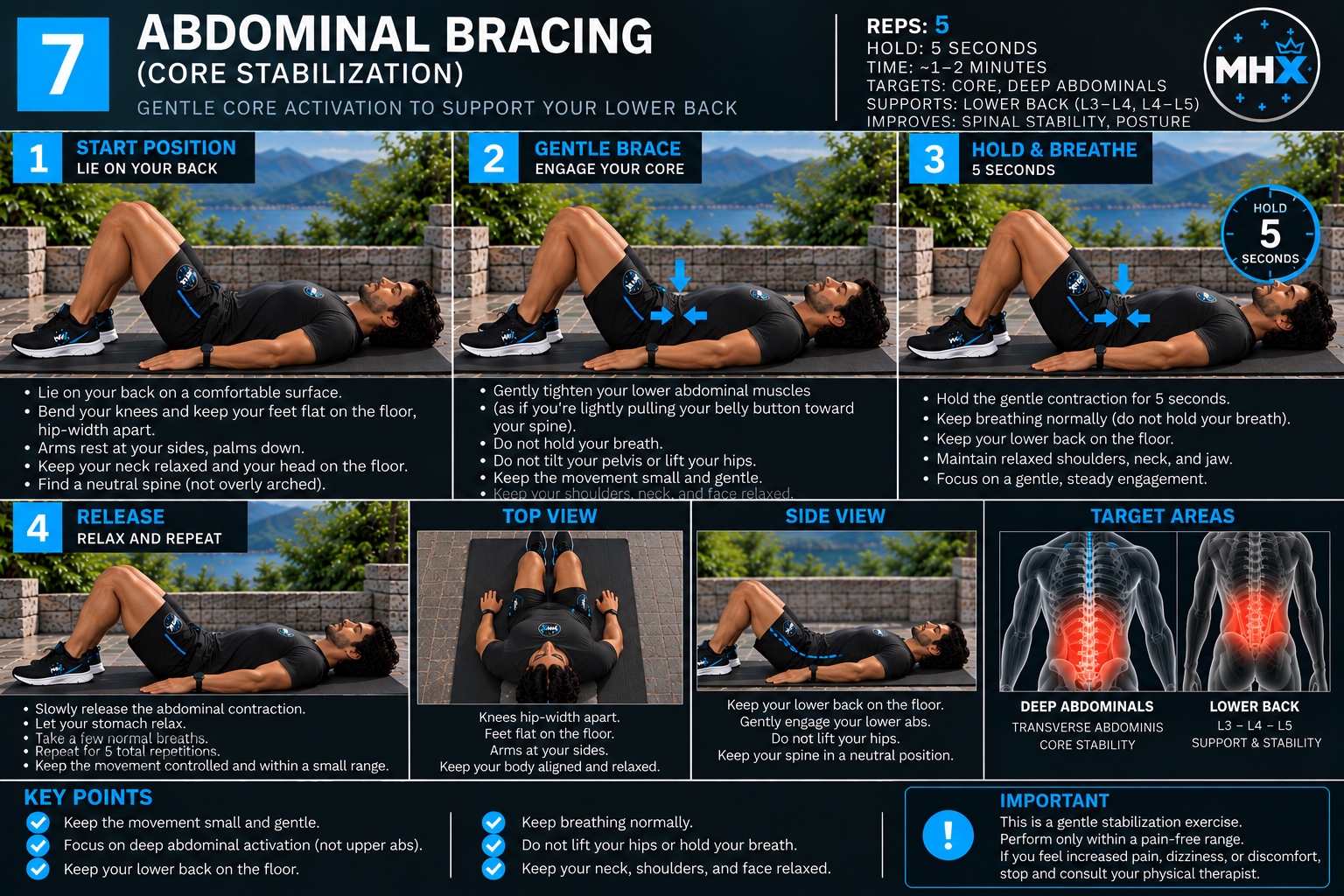
Abdominal Bracing

5 repetitions · hold 5 seconds

MHX illustrated guide for Abdominal Bracing

How to do it

Lie on your back with knees bent and feet flat. With your spine comfortably neutral, gently firm the muscles around your lower abdomen as though preparing for a light poke. Keep the pelvis still, shoulders soft and jaw relaxed. Hold 5 seconds while breathing, then release fully.

Breathing

Continue breathing normally throughout each hold.

Safety & modifications

Avoid maximal straining, breath-holding or bearing down. Do not force your lower back flat.

08
STABILIZATION

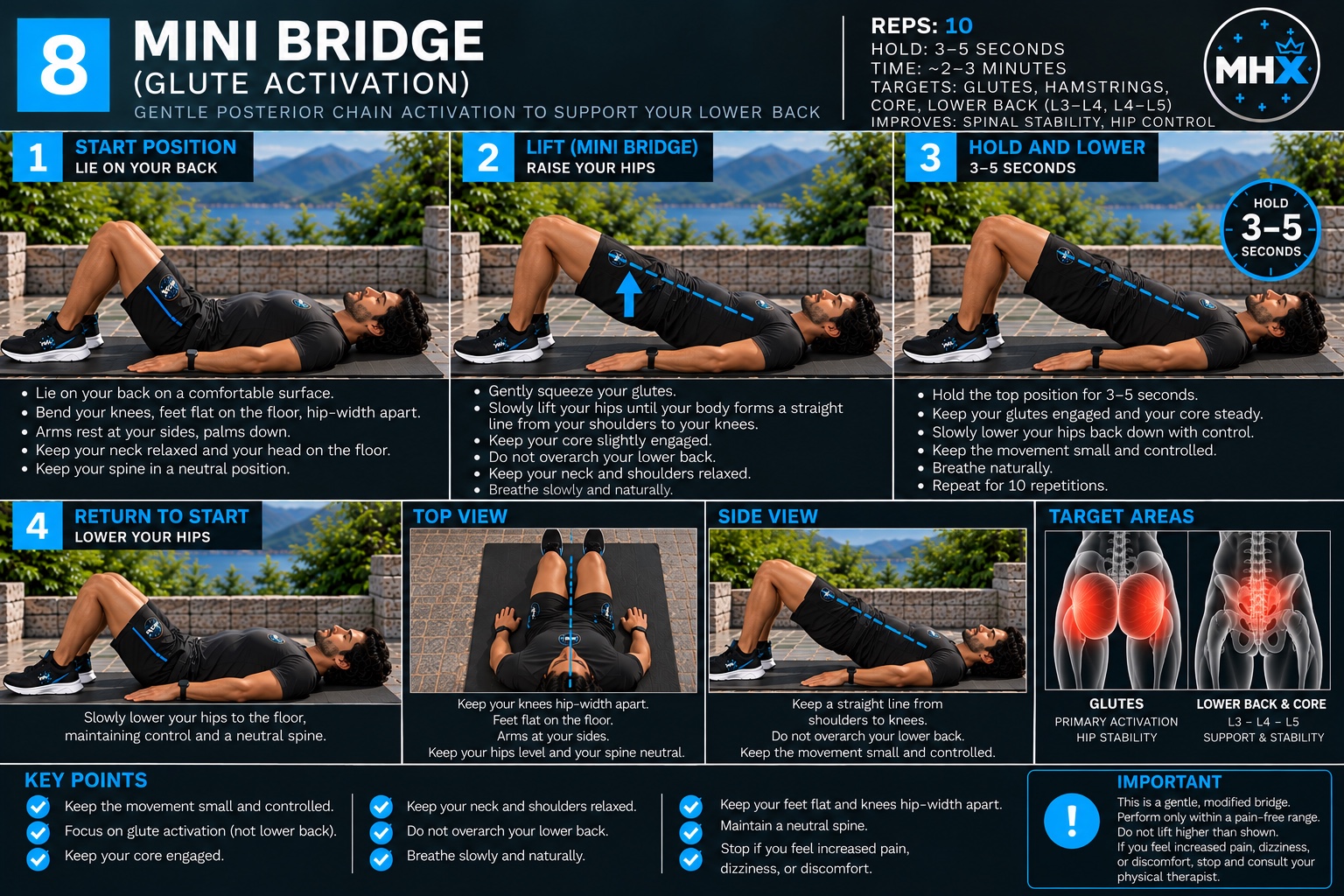
Mini Bridge

Optional · up to 10 repetitions · hold 3–5 seconds

MHX illustrated guide for Mini Bridge

How to do it

Lie on your back with knees bent and feet hip-width apart. Gently brace your abdomen and squeeze your glutes. Lift your hips only a small distance, without arching your lower back. Pause briefly, then lower slowly.

Breathing

Exhale on the lift; breathe normally during the brief hold.

Safety & modifications

Optional; consult a qualified professional if unsure whether this movement is suitable for you. A mini bridge only requires a small, comfortable lift. Stop for increasing back pain, leg symptoms, neck discomfort or dizziness.

09
STABILIZATION

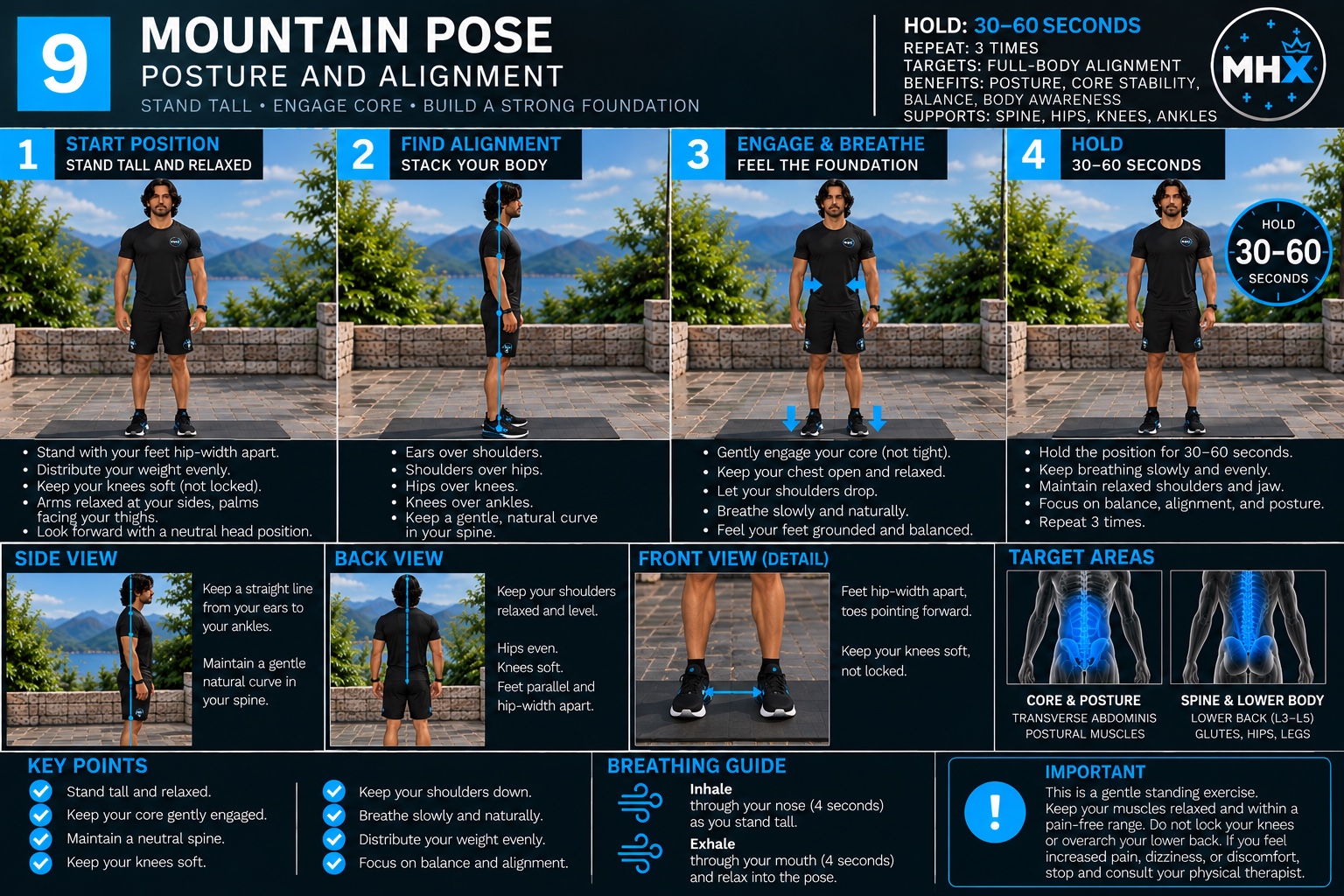
Mountain Pose

3 holds · 30–60 seconds

MHX illustrated guide for Mountain Pose

How to do it

Stand with feet hip-width apart, ideally near a stable chair or wall. Keep knees soft and distribute your weight evenly. Let your shoulders relax, chin level and spine naturally upright. Lightly engage your abdomen without rigid bracing. Breathe calmly while standing tall.

Breathing

Slow, comfortable breathing; do not hold your breath.

Safety & modifications

Do not lock your knees or force a perfectly straight spine. If you feel unsteady, sit down and stop the exercise.

10
RESTORATION

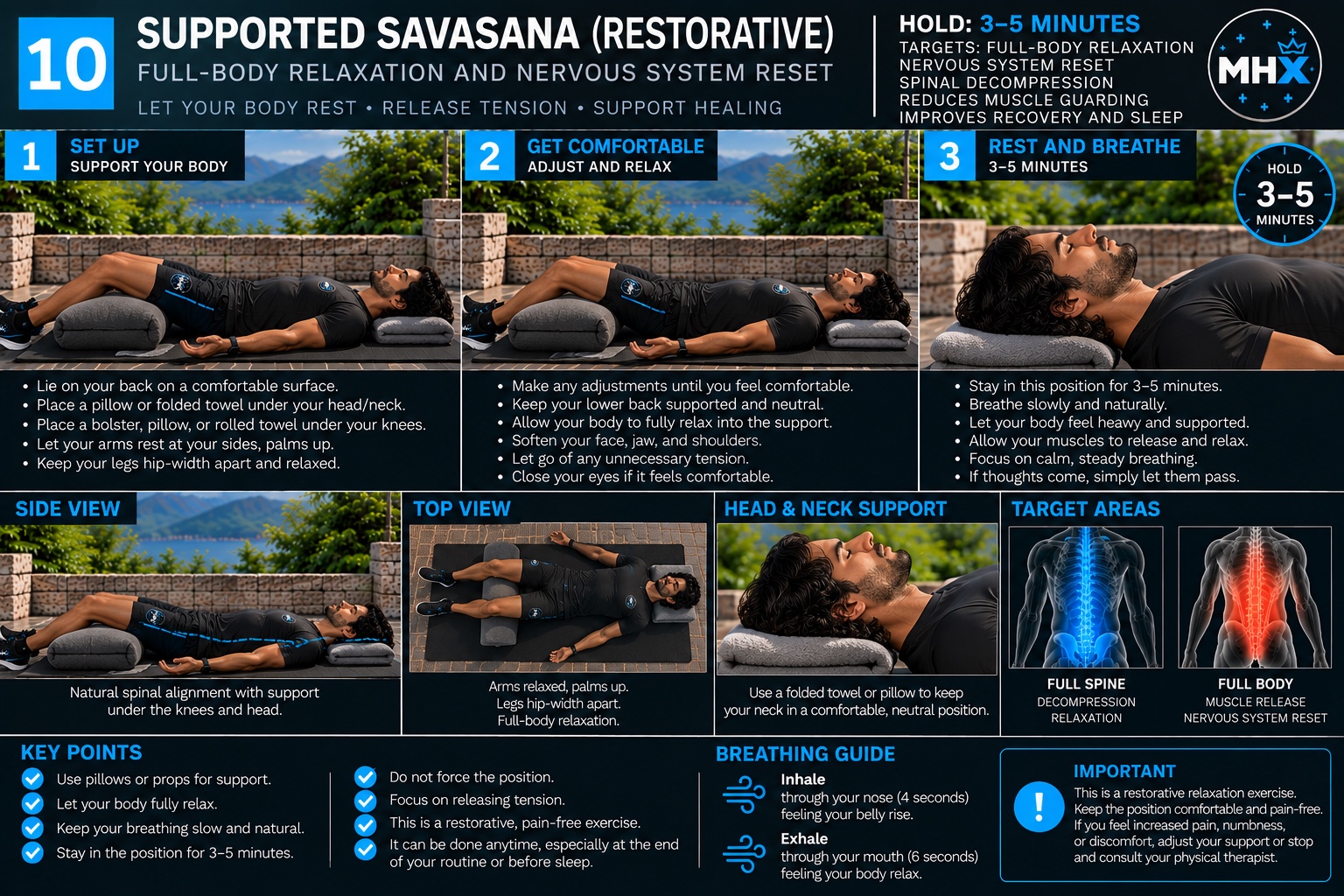
Supported Savasana

3–5 minutes

MHX illustrated guide for Supported Savasana

How to do it

Lie on your back with a pillow or folded towel supporting your head and neck. Place a bolster or pillow beneath your knees if comfortable. Let your arms rest loosely with palms up or in another easy position. Close your eyes only if comfortable. Breathe gently and allow your face, shoulders, abdomen and legs to relax.

Breathing

Try a relaxed inhale and slightly longer exhale without straining.

Safety & modifications

Use enough support to avoid strain. Change positions slowly, especially with dizziness. Do not force prolonged lying if symptoms increase.

♫ MHX Spinal Flow Recovery
Guided Audio Instructions
0:00--:--